

Many women come to see me believing they need larger breasts. More often than not, that isn’t the real problem.
What they miss is the shape they once had. Perhaps your breasts sat higher before pregnancy. Perhaps breastfeeding left them emptier. Perhaps weight loss changed their position, or perhaps time has simply altered the way your breasts look and feel. When I ask women what they’d like to change, they rarely mention cup size first. They talk about drooping, about losing confidence in a swimsuit or a fitted top, about breasts that no longer feel proportionate to the rest of their body.
A breast lift, medically known as a mastopexy, is designed to address exactly that. Its purpose is not simply to lift the breast — it’s to restore shape, improve position on the chest wall, and recreate balance, using your own breast tissue wherever possible.
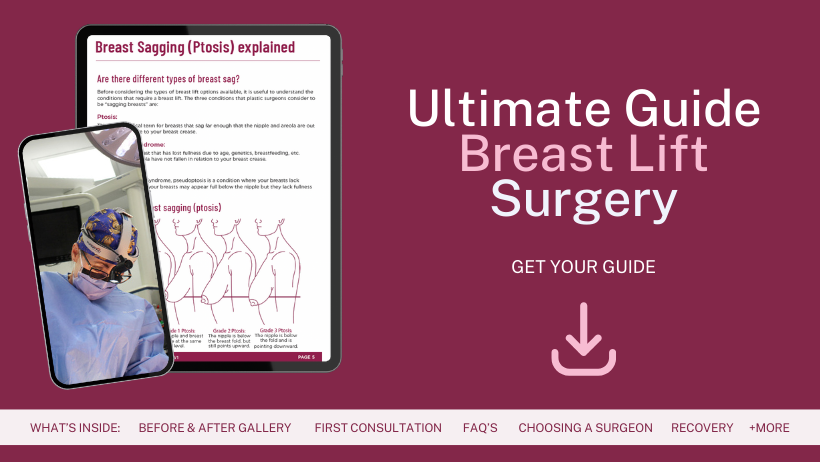
Download Dr Carmen’s Guide to
Breast Lift Surgery – Mastopexy
What is actually happening during a breast lift?
One of the biggest misconceptions about a breast lift is that it’s simply an operation to remove excess skin. It’s much more than that.
The breast is made up of breast tissue and fat, held within a skin envelope and supported by connective tissue. Pregnancy, breastfeeding, gravity, hormonal changes and weight fluctuation alter not only the skin, but the way the breast tissue is distributed. Over time the tissue settles. Instead of contributing to fullness in the upper breast, it tends to migrate into the lower pole and out towards the side of the chest. The nipple descends, the lower breast becomes heavier, and the breast gradually loses projection.
My role during surgery is not simply to take away skin — it’s to reorganise your own tissues. By reshaping and repositioning the breast tissue and changing its dynamic on the chest wall, I can often make far better use of the volume you already have. When that tissue is supported in a new, better position, I can frequently improve the contour of the upper breast, reduce lower-pole droopiness, address lateral (side) fullness, and recreate a breast that looks firmer, lighter and more balanced.
There’s a nice bonus, too: the healing process itself frequently improves the quality and firmness of the skin as the tissues remodel over the months after surgery.
You may have more breast tissue than you think
One of the most common surprises during a consultation is how often a woman believes she’s “lost” all of her breast volume — when in reality, she hasn’t lost nearly as much as she imagines.
The tissue is often still there. It has simply changed position: sitting lower, settling into the bottom of the breast, or drifting toward the side as lateral fullness rather than contributing to projection. When I examine you, I’m not only asking how much breast tissue is present — I’m asking where it is.
Many women are surprised to learn they already have enough of their own tissue to create a full, natural C-cup breast. It simply needs to be reorganised and supported in a better position. That’s often the whole point of the operation.
I want to see the world through your eyes
Before I decide how to perform an operation, I want to understand what you see when you look in the mirror, and what you’re hoping for. So one of the first things I ask about is your goal. What’s the look you want? What are you actually trying to achieve? I want to see it through your eyes — because the right operation depends far more on your vision than on any measurement.
Every woman answers differently. Some want to regain the breast they had before children. Some simply want the nipple back where it belongs. Some want to feel comfortable without a heavily structured bra, or more confident in clothing.
Here’s where I’ll always be honest with you. If you’re hoping for the very round, very high, full-at-the-top look of a breast that’s never been through pregnancy or weight change, a lift alone usually can’t recreate that — and I’d rather tell you that at the start than promise something your tissues won’t deliver. Life leaves its mark on the breast, and that’s normal. What a lift can do, once you’ve been through pregnancies, weight variation or the natural effects of time, is give you a breast that sits in a better position on the chest wall, with better proportions and a better-placed nipple and areola — a result that looks natural for your body.
If genuine extra volume or upper-pole fullness is your priority, implants may become part of the conversation. But if you already have enough of your own breast tissue, I’ll almost always prefer to make the best possible use of it first. Your own tissue tends to behave, and age, more naturally.
Is a breast lift right for me?
This is one of the most important parts of the consultation — and it’s about much more than your breasts.
People sometimes think I’m simply deciding whether the operation can be done. What I’m really working out is whether surgery is likely to give you an excellent result that will also last.
Yes, I assess your breasts closely: breast volume, tissue quality, skin quality and elasticity, nipple position, the breast footprint, symmetry, and the proportions of your chest wall. But I’m just as interested in you as a whole person, because none of this happens in isolation from the rest of your life. So I’ll also want to understand:
- your general health and how well your body is likely to heal
- your nutrition and overall wellbeing, which genuinely affect recovery
- whether your weight is relatively stable
- whether significant hormonal change is underway or expected
- whether you’re planning another pregnancy
- and, importantly, how much your breasts are affecting your comfort, confidence and quality of life
Because life will continue after surgery. Gravity continues. Hormonal change may continue. Your body will keep ageing. A breast lift can’t stop any of that — what it can do is reset where you start from. For that reason, the best timing is usually when your body and your life have reached a relatively stable point: your family feels complete, your weight has settled, and you have the time and space to recover well.
I often think about suitability in two simple words: willing and able. If your breasts are affecting your quality of life and you feel both willing to go through surgery and able to recover from it, you may well benefit. Whether a lift is genuinely the right procedure for you is something we confirm together at your consultation, after a proper assessment.
Breast lift, breast lift with implants, or breast reduction?
One of the questions I hear most often is: which operation do I actually need? The honest answer is that it’s different for every woman — and it’s rarely about cup size. When I assess a breast, I’m really asking three things:
- How much breast tissue do you have?
- Where is that tissue positioned?
- Is there too much tissue, too little, or simply enough tissue in the wrong place?
From there:
- If there’s enough breast tissue but it has descended, a breast lift alone is often the best solution.
- If breast volume has genuinely been lost — often after pregnancy or weight loss — a breast lift combined with implants (or fat transfer) may achieve a fuller result.
- If there’s excess breast tissue causing droop and symptoms such as neck, shoulder or back discomfort, a breast reduction can reduce weight while restoring shape and position at the same time.
There’s no one-size-fits-all operation. You can read more about the difference between a breast reduction and a breast lift, and about combining a lift with implants on my breast augmentation page.
My approach to technique
There isn’t a single “breast lift.” There’s a family of techniques, and part of my job is choosing — and sometimes combining — the ones that suit your anatomy and your goals. This is where tailoring the operation to you really matters.
- I trained in the Hall-Findlay technique, a vertical (often called “lollipop”) method of reshaping the breast — and I’ve recently attended a workshop with Dr Elizabeth Hall-Findlay to discuss her approach and refine my own first-hand. In suitable patients, a vertical approach can give strong control over breast shape while limiting scarring compared with the traditional anchor pattern. If you’d like to understand the thinking behind it, her book Aesthetic Breast Surgery: Concepts & Techniques is a landmark text in the field.
- In some cases I add a Ribeiro pedicle — using a flap of your own lower-pole breast tissue to build fullness into the upper part of the breast. It’s a way of creating upper-pole shape from tissue you already have, rather than relying on an implant.
- For women who have lost a large amount of weight, I sometimes use a technique developed specifically for that situation (the Rubin approach), which reshapes and re-suspends your own tissue to restore contour after significant weight loss.
- Where the reshaped breast benefits from extra support, I may use an internal bra — internal bra sutures, or an internal sling created from your own tissue that acts like a built-in brassiere to help hold the shape.
- And I may add fat transfer, using your own fat, to improve the quality of the tissues, refine the breast footprint, and add to the overall shape.
Not every technique suits every patient, and the right combination is a decision we make together at consultation, once I’ve assessed your tissues. But the underlying principle is consistent: wherever I can, I want to use and reorganise your own tissue to create a natural result.
My philosophy of breast aesthetics
Beautiful breasts aren’t defined by cup size. Beauty resides in proportion and shape, in the quality of the tissues, in the position, shape and scars of the nipple-areola complex, and in the breast’s relationship to the surrounding tissues and contours.
So when I assess a breast, I’m considering far more than whether it sits high or low. I look closely at the quality of the tissues and the quality of the skin envelope — its stretch, and how it’s likely to behave — because how skin has behaved in the past is often the best guide to how it will behave in the future. I assess the breast’s width and length, its footprint on the chest wall, the balance between the upper and lower pole, projection, cleavage, nipple and areolar position and proportion, and symmetry, along with the relationship of the breast to your shoulders, waist and hips.
I always give careful attention to lateral (side) fullness, which is so often overlooked — associated liposuction can help shape that region. And I think about where the breast started — the position it has come from — because my intention, as far as it can be achieved, is to reverse what life has done: weight loss (sometimes repeated, sometimes yo-yo), pregnancies, breastfeeding and time.
My aim is never a breast that draws attention because it looks operated on. My aim is a breast that looks as though it has always belonged to you.
You can see examples of real results in my breast lift before-and-after gallery. (Please note: these images are of patients who have given written consent, they are intended for people over 18, and results vary from person to person.)
Breast lift scars
Every breast lift leaves scars. I never minimise that, because you deserve an honest discussion.
The scars are the necessary trade-off that allows me to reshape and support the breast — and their final appearance depends on several things, and I always endeavour to minimise the scarring. The surgical technique matters. Meticulous wound closure matters. So does your own biology: your skin quality, your genetics, your nutrition and the way your body heals. And finally, the care you give your scars during recovery has a real influence on how they mature.
It’s also worth understanding that scars aren’t only what you see on the surface. The breast heals internally as well, and here the quality of your tissues, together with the accuracy and precision of the surgical technique, contributes a great deal — not only to how well the internal healing settles, but to the overall quality of the final result.
The reassuring part is that breast skin generally heals very well. With careful technique, a structured scar-management program and ongoing follow-up, most scars continue to soften, flatten and fade over the first twelve months. Scar care isn’t left to chance — we discuss it with every patient and guide you through it. You can read more in my guide to reducing scars after a breast lift.
The surgery itself
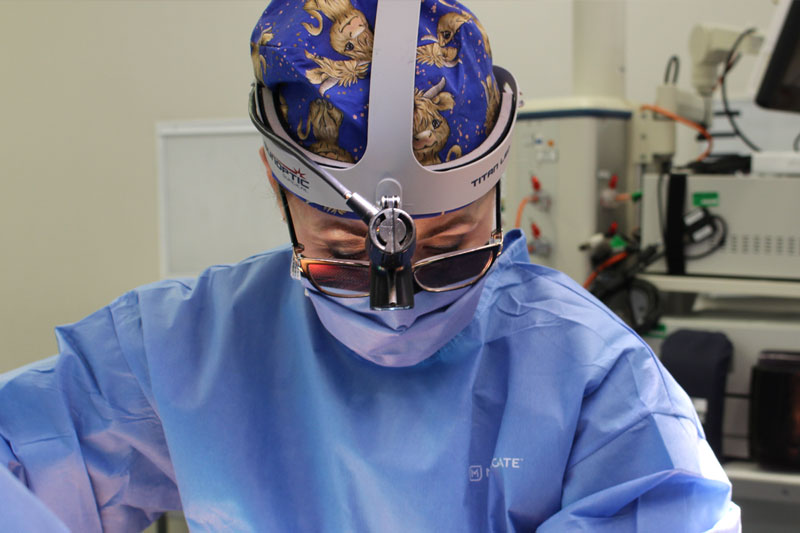
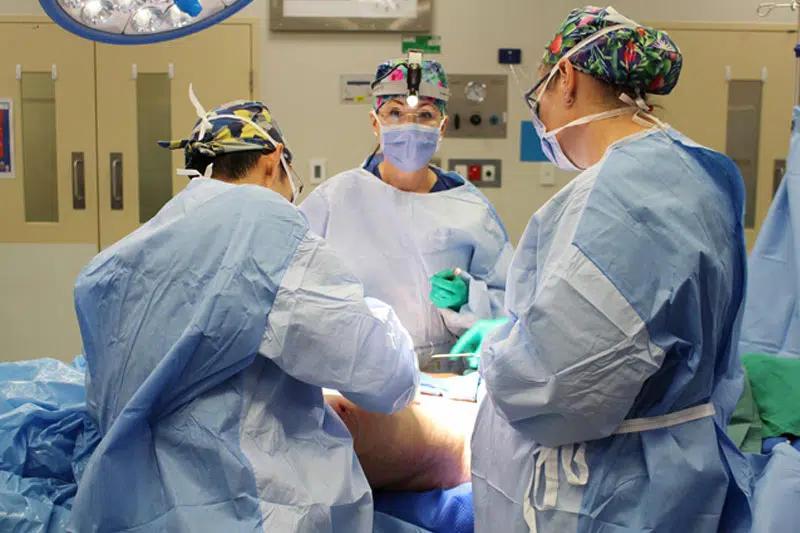
A breast lift is performed under general anaesthetic and usually takes around one to two hours, though this varies with the specific technique. It’s most often done as day surgery, though some women stay overnight depending on their individual circumstances. In some cases small drainage tubes are used, and you’ll wear a support garment afterwards. The incision pattern I recommend — around the areola, vertically down to the crease, or an anchor pattern — depends on your anatomy and the degree of lift needed, and I’ll explain exactly what’s planned for you before your surgery.
Recovery
Recovery is a gradual process rather than a single event. Most women are more comfortable within the first couple of weeks, and most return to non-strenuous work within about 7 to 14 days, though the breast itself keeps settling and softening for several months. You’ll do only light activity for the first few weeks, and it generally takes three to six months for the breast to settle into its final shape.
I review my patients closely afterwards — commonly at around one, two, four and six weeks, and again at three, six and twelve months. Those appointments matter as much as the operation itself: they let us monitor healing, guide scar management, and make sure your result develops as expected. There’s more detail in my guides on recovery after a breast lift, managing swelling and bruising, and when you can exercise again.
Risks and complications
A breast lift is a significant operation, and like all surgery it carries risks. I’d rather you understand them clearly than be surprised later. These can include bleeding, infection, delayed wound healing or wound separation, visible or thickened scarring, changes in nipple or breast sensation, asymmetry, and — uncommonly — problems with blood supply to the nipple or skin. There are also the general risks of anaesthesia, and combining a lift with implants adds its own considerations. Sometimes a further procedure is needed to refine the result. Individual risk depends on your health, your tissues and your technique, and we discuss all of this honestly at your consultation. Please also read the full risks and complications information before deciding on surgery.
How much does a breast lift cost in Melbourne?
There’s no single price for a breast lift, because no two operations are the same. Your fee depends on the technique required, the complexity of your surgery, the hospital, your length of stay, and whether any procedures are combined.
A complete quote is made up of several separate parts: the surgeon’s fee, the anaesthetist’s fee, the surgical assistant’s fee, and the hospital fees. After I’ve assessed you at consultation, my team will give you a clear, itemised quote specific to your surgery, along with information on payment options.
A purely cosmetic breast lift is generally not covered by Medicare or private health insurance. In certain clinical situations some breast surgery may attract a Medicare item number, but eligibility is always assessed on clinical grounds and is never automatic — it’s something I’ll assess honestly with you at your consultation rather than something to assume in advance.
Planning your surgery and consultation
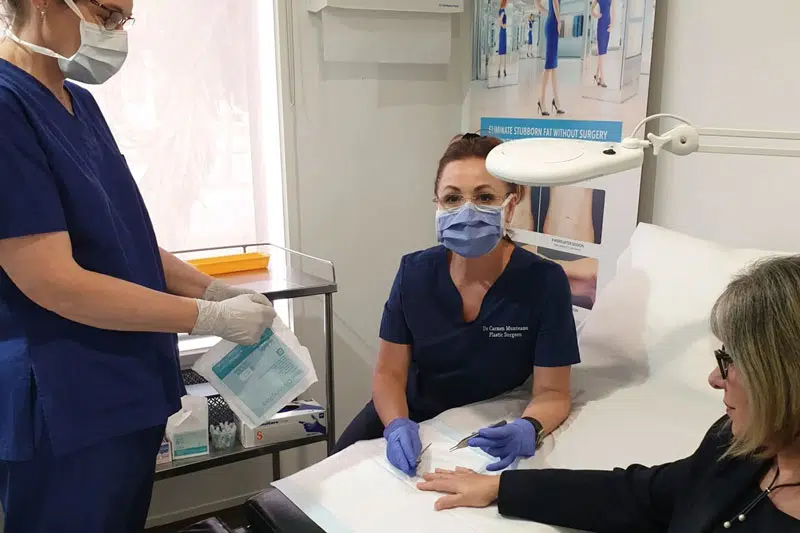
Choosing to have surgery is a considered decision, and I see it as a privilege to be part of that journey. At your consultation I’ll listen carefully to what you’re hoping for, examine you thoroughly — your general health, the size, shape and skin quality of your breasts, and the position of your nipples and areolae — and then give you honest, personalised recommendations. Sometimes that recommendation is a lift. Sometimes it’s a lift with implants, or a reduction. Occasionally, it’s to wait. Good surgery begins with making the right decision, not simply performing an operation.
A GP referral is now essential to see me for any type of surgery, so please arrange one before your appointment. A consultation fee applies — my team will confirm the amount when you book — and it’s best to arrive a little early for your in-person consultation.
To arrange a consultation, please call the practice on 03 9852 0545 or book through the website at drcarmen.com.au.
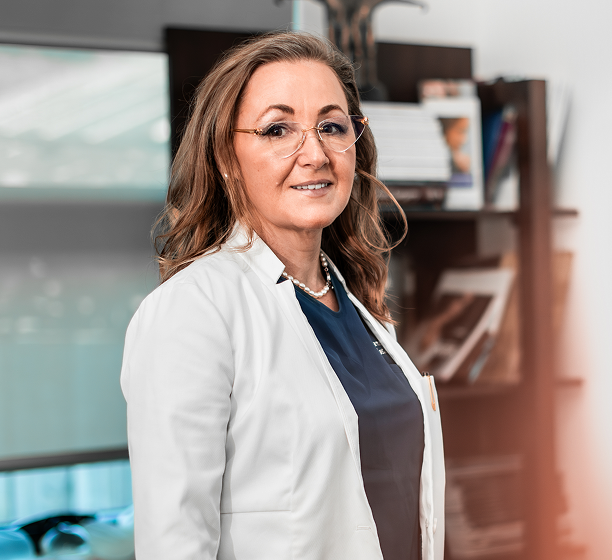
Dr Carmen Munteanu, MD, FRACS (Plas), is a Specialist Plastic Surgeon based in Melbourne’s eastern suburbs, with over 25 years of surgical experience and a focus on aesthetic breast surgery and body contouring. AHPRA registration MED0001211281.
This page is general information and is not personal medical advice. All surgery carries risks — please read the risks and complications page. Imagery and content are intended for those aged 18 and over. Any surgical or invasive procedure carries risks; before proceeding you should seek a second opinion from an appropriately qualified health practitioner.